

What ServiceNow Actually Does
The Simple Breakdown Behind the $NOW Thesis

ServiceNow is one of those companies that a lot of investors know is high quality, but not everyone can clearly explain what it actually does. People hear “enterprise software,” “workflow automation,” or “AI platform,” and it can start to sound like every other SaaS company in the market. That is why I think ServiceNow is misunderstood.
The simple way I think about ServiceNow is this: it helps large companies get work done more efficiently.
That may sound almost too simple, but inside a large business, getting work done is not always simple. Big companies have thousands of employees, multiple departments, old systems, different software tools, approval chains, security requirements, HR requests, customer issues, IT problems, and operational bottlenecks. A lot of work still gets stuck in emails, spreadsheets, meetings, chat messages, and disconnected software platforms.
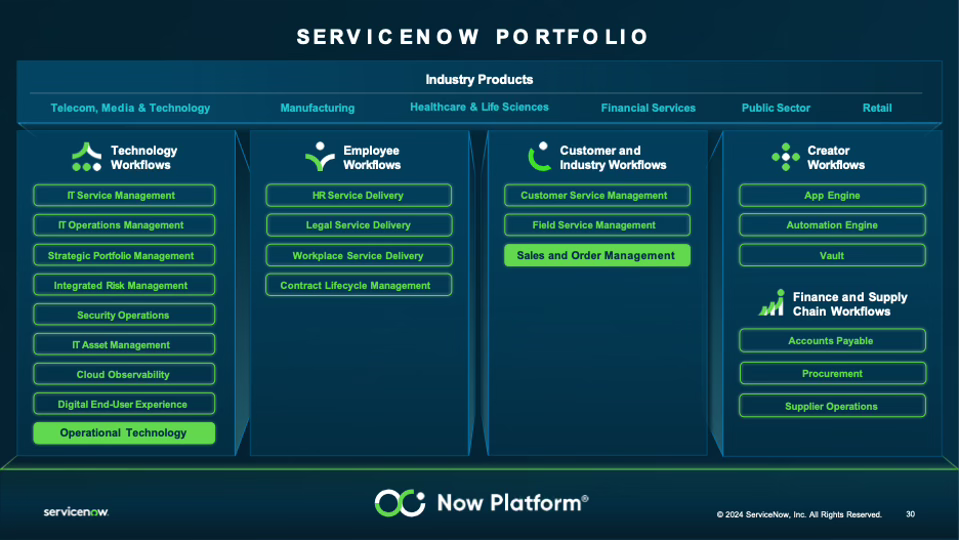
ServiceNow tries to solve that problem by becoming the digital workflow layer across the enterprise. Instead of work being scattered everywhere, ServiceNow gives companies one platform to organize, route, automate, track, and complete that work.
That is the core of the business.
ServiceNow Is A Workflow Platform
To understand ServiceNow, you first have to understand what a workflow is. A workflow is just the process of getting something done. Every company has thousands of them.
For example, say an employee needs a new laptop. That sounds easy, but inside a large company, that request may need approval from a manager, review from IT, security checks, procurement, finance approval, and then someone has to actually fulfill the request. Without a platform, that process can become messy quickly.
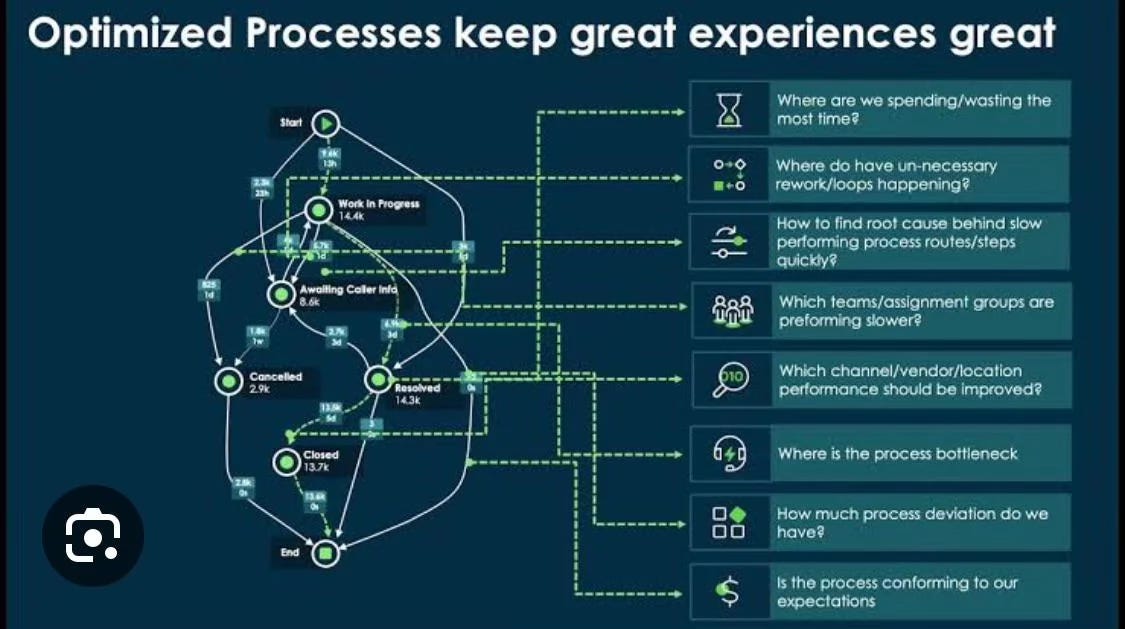
ServiceNow takes a process like that and turns it into a digital workflow. The employee submits the request, the right people are notified, approvals happen inside the system, IT knows what to do, the employee can track the status, and the company can measure how long the process took.
That is one small example, but the same idea applies across the whole business. IT tickets, HR requests, customer service cases, security incidents, legal requests, finance approvals, employee onboarding, software access, and operational issues can all become workflows.
This is why ServiceNow can be so valuable. It is not just helping companies store information. It is helping them move work from request to resolution.
It Started In IT, But The Opportunity Is Much Bigger
ServiceNow originally became known for IT Service Management. In simple terms, that means helping companies manage internal IT problems. If an employee cannot log in, needs software access, has a broken laptop, or reports a system issue, ServiceNow helps the company handle that request.
That was the starting point, but it is not the full story anymore.
Over time, ServiceNow expanded beyond IT into other areas of the business. Today, the platform touches areas like customer service, HR, security, risk, operations, finance, developers, and industry-specific workflows. The company is no longer just trying to be the place where IT tickets go. It is trying to become the place where enterprise work gets managed.
That is a much bigger vision.
This is also why the stock can be misunderstood. If someone still thinks of ServiceNow as an IT ticketing company, they are probably missing the bigger picture. The real thesis is that ServiceNow can become a core operating platform for large companies.
Why Companies Need ServiceNow
The bigger a company gets, the harder it becomes to stay organized. Different departments use different systems. Data lives in different places. Employees waste time figuring out who owns what. Managers lack visibility. IT teams get buried in requests. Customer service teams lack context. Security teams need to move quickly. Leadership wants more automation, but they also need control.
ServiceNow helps by connecting people, systems, data, and workflows in one platform. It gives companies a better way to manage the work happening across the business.
This matters because inefficiency is expensive. If employees waste time waiting for approvals, chasing updates, switching between tools, or manually doing work that could be automated, that hurts productivity. ServiceNow’s value proposition is that it can help companies reduce friction, automate repetitive tasks, speed up service, improve visibility, and lower costs.
That is why large companies are willing to pay for it.
ServiceNow is not just selling software because software is cool. It is selling a way for companies to run better.
The Business Model Is Powerful
ServiceNow has a strong business model because it sells subscription software to large enterprises. Customers pay to use the platform over time, which creates recurring revenue. That recurring revenue gives the company better visibility than a business that has to restart from zero every quarter.
The other powerful part of the model is expansion. A customer may start with ServiceNow for IT, but over time they can add more products and more workflows. They may expand into HR, customer service, security, risk, finance, operations, and AI products.
This is the “land and expand” model. ServiceNow lands inside a company with one use case, then expands deeper as the platform becomes more valuable.
That is important because once a large business builds important workflows inside ServiceNow, it becomes harder to replace. The more workflows ServiceNow powers, the more embedded the platform becomes. That stickiness is a major part of the thesis.
The AI Control Tower Narrative
This is where the story gets really interesting.
AI is creating a new problem for large companies. Every business wants to use AI to improve productivity, automate work, reduce costs, and move faster. But as companies start using more AI tools, AI agents, models, and automated workflows, they also need a way to manage and control all of it.
That is where the “AI Control Tower” narrative comes in.
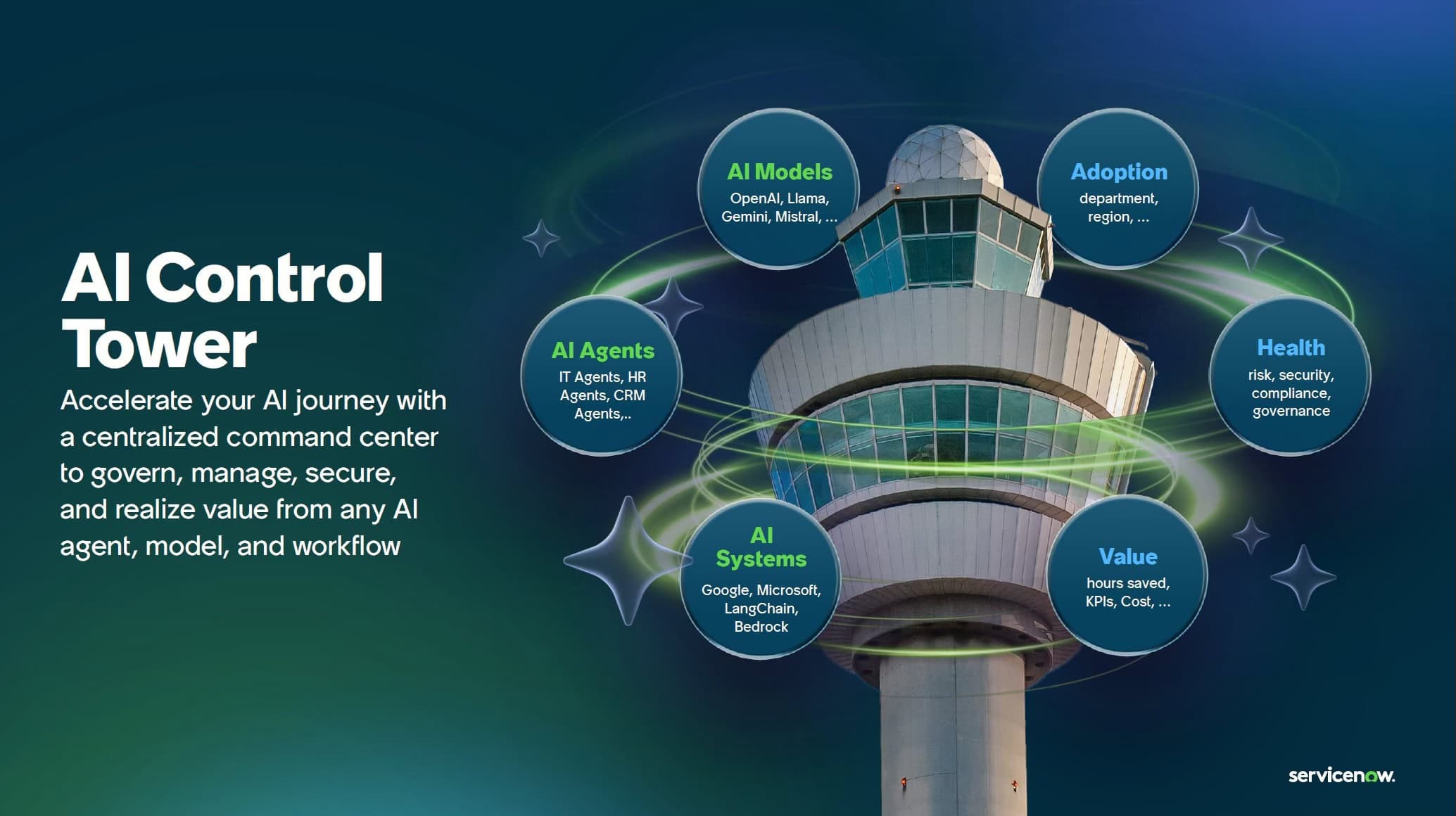
The basic idea is that if AI agents are going to start doing more work inside companies, businesses need a central place to monitor, govern, secure, and measure them. Companies need to know what AI tools are being used, what agents are operating, what data they have access to, what risks exist, what value they are creating, and whether they are following company rules.
ServiceNow wants to be that control center.
This is a big deal because AI will not just live in one app. It will show up across IT, HR, customer service, security, finance, operations, sales, legal, and software development. That creates a huge governance and coordination problem. The more AI spreads across the enterprise, the more companies need visibility and control.
ServiceNow’s pitch is simple: companies cannot control what they cannot see.
If ServiceNow can become the platform that discovers, monitors, governs, and connects AI agents to real business workflows, the company could become even more important in the AI era.
Why AI Could Make ServiceNow More Important
A lot of investors are worried that AI could disrupt traditional software companies. That is a real risk for the software sector, and I do not think investors should ignore it. If AI changes how software is built, how employees interact with applications, or how companies buy software, some businesses could face pressure.
But I think ServiceNow has a different setup.
ServiceNow is not just a single-purpose software tool. It is a platform that helps companies organize and execute work. AI still needs somewhere to operate. It needs workflows. It needs business context. It needs approvals. It needs governance. It needs security. It needs integration with existing systems. It needs humans in the loop for certain processes.
That is why ServiceNow could actually benefit from AI.
AI without workflow is just an assistant. AI connected to workflows can actually get work done.
This is the key point. ServiceNow is not just adding AI features to make the platform sound more exciting. The company is trying to make AI part of the way enterprise work gets done. That means AI can help summarize issues, route tickets, automate tasks, recommend next steps, assist employees, help developers, improve customer service, and eventually coordinate agents across different parts of the business.
If ServiceNow becomes the platform where AI connects to real enterprise workflows, the long-term opportunity could be massive.
The Financials Still Look Strong
ServiceNow is already a large business, but it is still growing at an impressive rate.
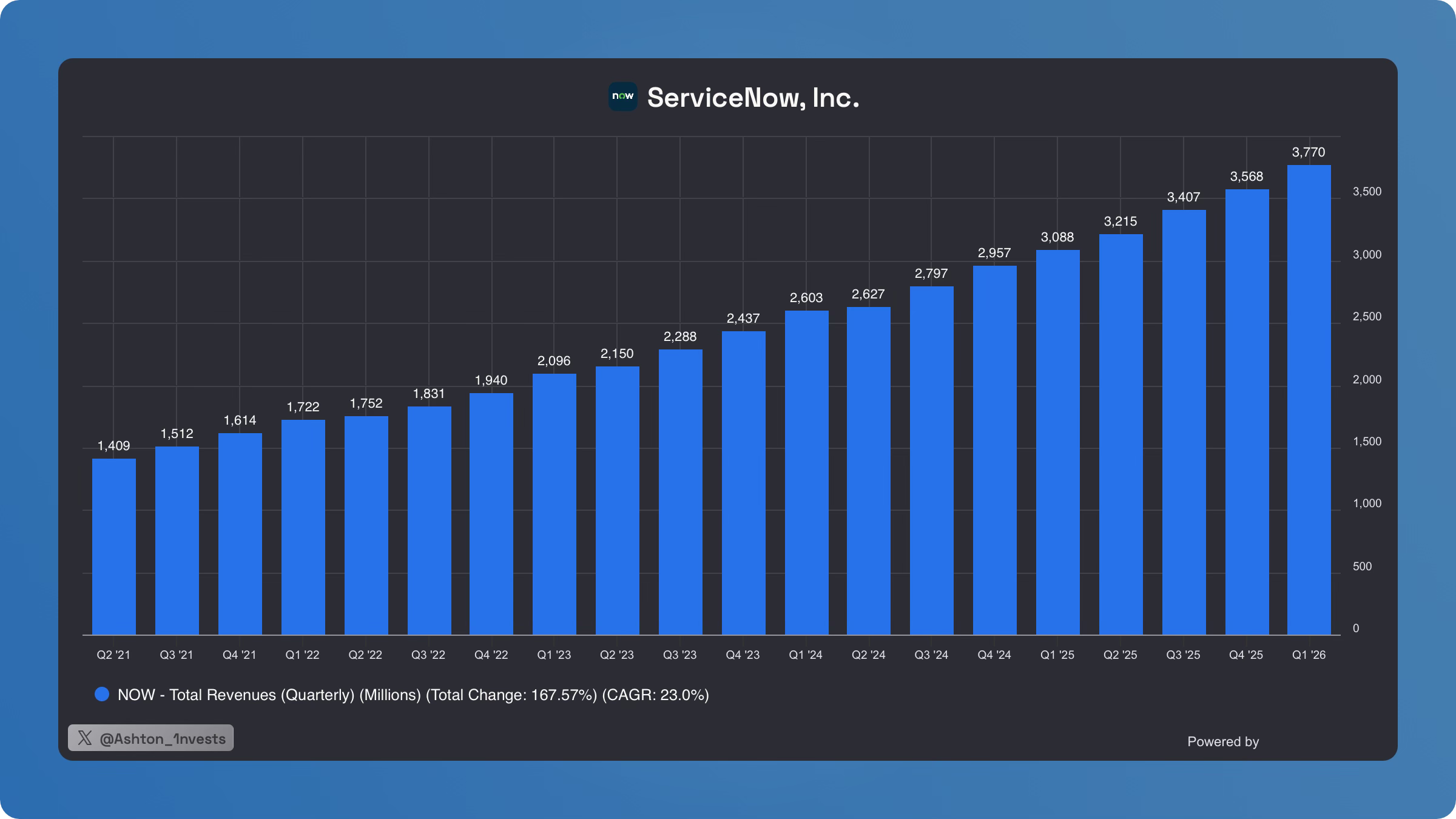
In Q1 2026, ServiceNow reported subscription revenue of $3.671 billion, up 22% year over year. Total revenue came in at $3.770 billion, also up 22% year over year. For a company of this size, that is still very strong growth.
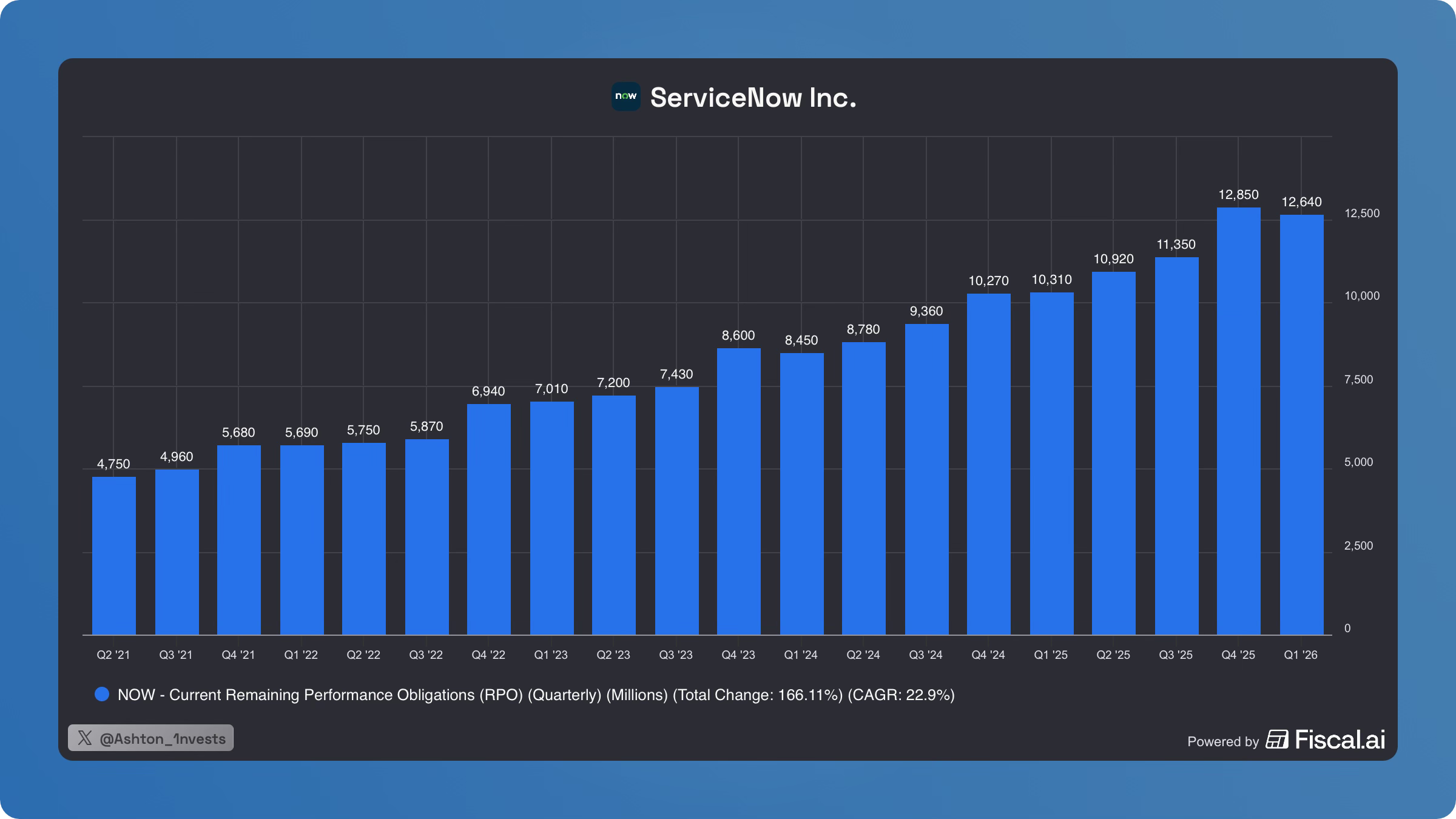
One of the most important metrics for ServiceNow is cRPO, or current remaining performance obligations. This is basically contracted revenue that the company expects to recognize over the next 12 months. In simple terms, it gives investors a better look at future demand that is already under contract.
For Q1 2026, ServiceNow reported cRPO of $13.53 billion, up 24% year over year. That matters because it shows customers are still committing to the platform.
This is one reason I like ServiceNow. It is not a small speculative software company hoping to figure things out. It is a large, profitable enterprise software platform that is still growing revenue above 20%, expanding its product set, and positioning itself for AI-driven demand.
What Investors Should Watch
For me, the most important things to watch with ServiceNow are subscription revenue growth, cRPO growth, operating margins, free cash flow, AI adoption, and large customer expansion.
Subscription revenue tells us whether customers are still spending more on the platform. cRPO gives a look into future contracted demand. Margins and free cash flow show whether the company can turn growth into real earnings power. AI adoption will show whether the AI Control Tower narrative is actually becoming a real business driver. Large customer growth matters because ServiceNow’s model becomes more powerful when big enterprises keep expanding their spending.
I do not need every quarter to be perfect, but I do want to see the long-term thesis continue to strengthen. If ServiceNow keeps growing at a strong rate, expanding into more workflows, improving profitability, and proving that AI increases the value of the platform, I think the stock can continue to compound over time.
The Risks
ServiceNow is a great business, but it is not risk-free.
The first risk is valuation. High-quality software companies often trade at premium valuations. If growth slows or investors become less willing to pay up for software, the stock can get hit hard.
The second risk is AI disruption. I believe AI can make ServiceNow more important, but this still needs to be watched closely. If AI changes enterprise software in a way that weakens traditional platforms, that would matter.
The third risk is competition. ServiceNow competes with large and capable companies across different workflow categories, including Microsoft, Salesforce, Atlassian, Workday, and others. The company has to keep proving why its platform deserves more enterprise spending.
The fourth risk is execution. ServiceNow has a huge vision, but it still has to execute. It needs to keep growing, launching useful AI products, expanding into more departments, and showing customers real value.
My Bottom Line
ServiceNow is not the easiest company to explain, but once you simplify the business, the thesis becomes much clearer.
Big companies have messy work. ServiceNow helps organize that work.
Big companies want automation. ServiceNow helps automate that work.
Big companies want AI. ServiceNow helps connect, govern, and control that AI inside real business processes.
That is why I own $NOW.
I own it because I think it can become one of the most important enterprise software platforms over the next decade.
The company already has a strong subscription model, deep enterprise relationships, durable revenue growth, and a platform that becomes more valuable as more workflows move onto it. Now, with AI, the opportunity could get even bigger.
If ServiceNow becomes the AI Control Tower for the enterprise, the market may eventually realize this is not just another software company. It is a core platform for how large companies get work done.
That is the thesis.
Simple, but powerful.
Disclaimer: This article is for educational and informational purposes only. This is not financial advice, and it is not a recommendation to buy or sell any stock. I am sharing my personal research and opinion. Always do your own research and make investment decisions based on your own goals, risk tolerance, and financial situation.
The AI Control Tower thesis only works if ServiceNow owns enough of the workflow to govern what happens inside it.
That is the open question.
AI agents may create value at the task level, but whoever controls the workflow captures the enterprise power.